Homework without cheating.
Lessons taught by the great minds.
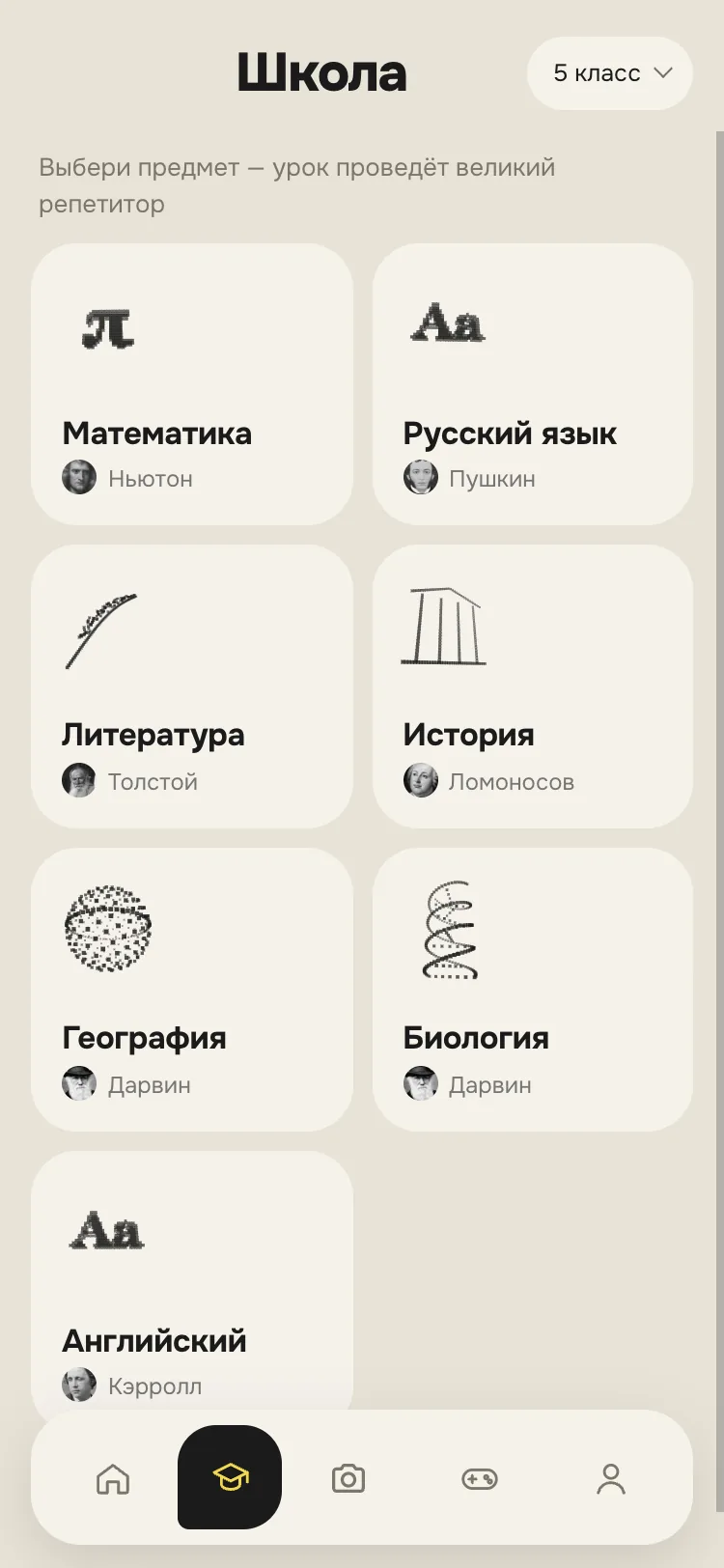
A Russian-language AI school for grades 1–11: Newton explains equations, Pushkin — Russian, Tolstoy — literature. The tutor never just hands over the answer — it leads the student there, step by step. Designed and built solo with AI in seven days.
Kids don't need another answer machine.
Children already paste homework into chatbots and copy what comes back. Parents see the grade a week later. A good tutor costs more per hour than a year of software. Echo bets on the opposite of an answer engine: a tutor that makes you think — and has a face you want to talk to.
AI does the homework
Paste the task, copy the answer, learn nothing. The faster the AI, the worse the habit.
Parents are blind
They can't see what their child actually knows — only grades, and only after it's too late.
Tutors don't scale
An hour with a great tutor is a luxury. Daily practice between lessons is where learning happens.
The learning engine is the product.
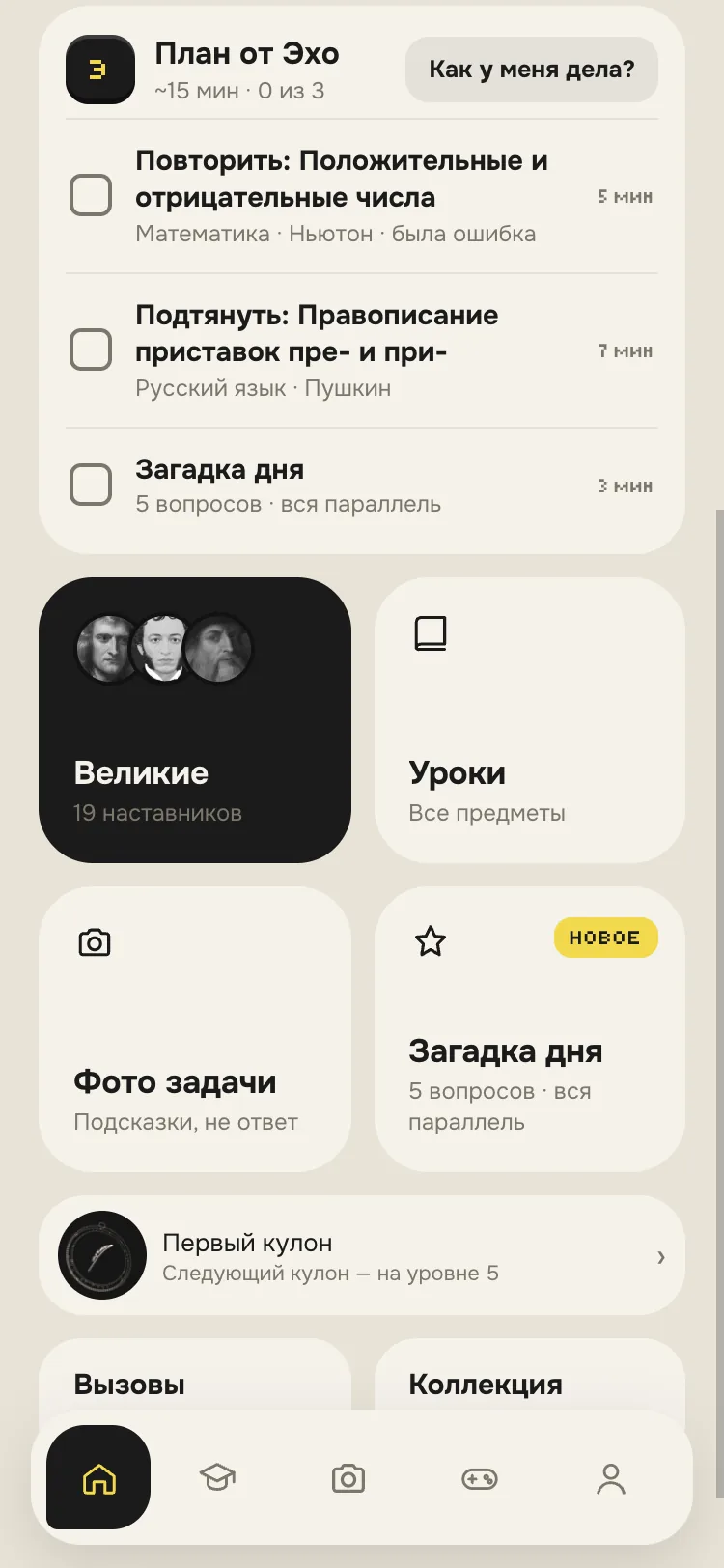
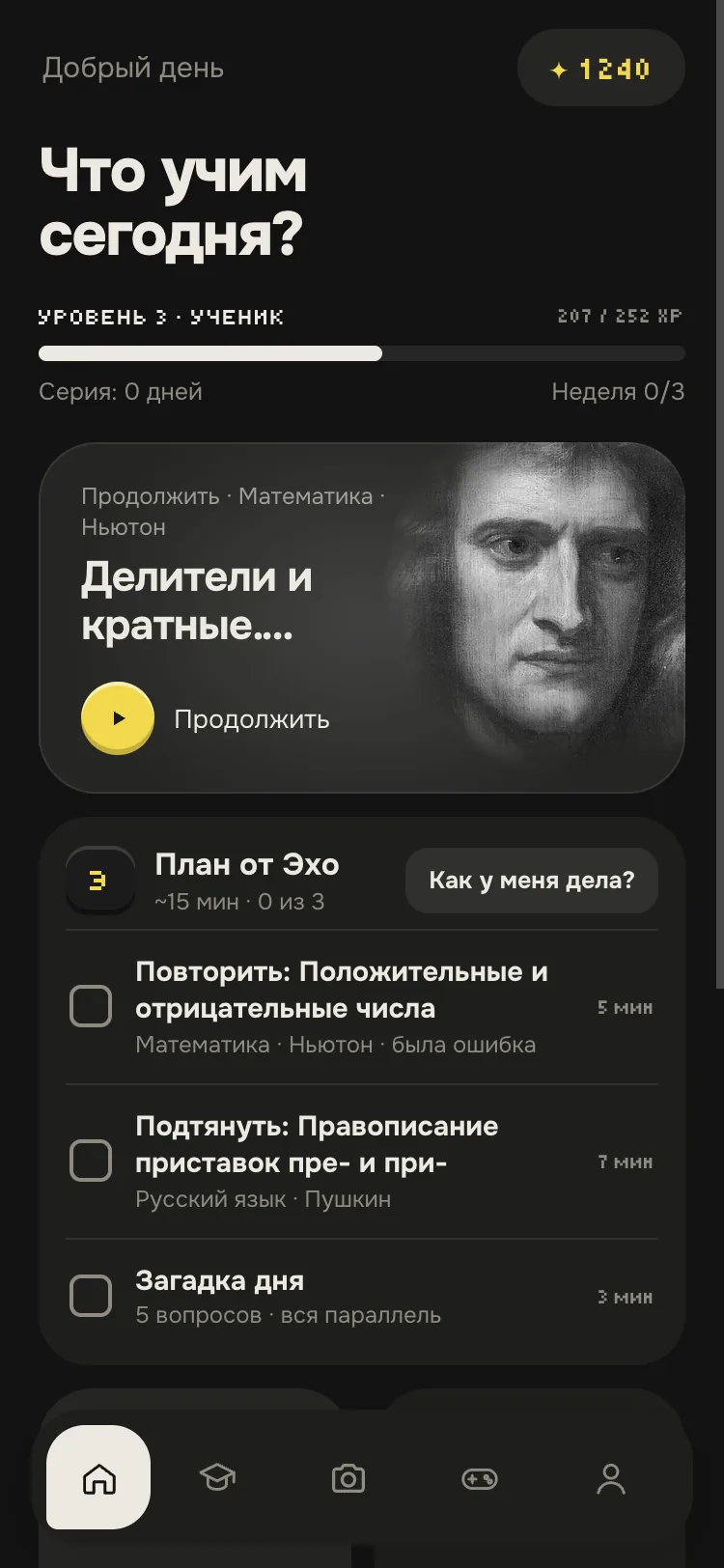
Curriculum × memory × adaptive help, wearing the face of a great mind. Tolstoy pulls a 12-year-old into the conversation; the engine behind him knows the grade-6 programme, remembers the last three mistakes and decides how much help to give right now.
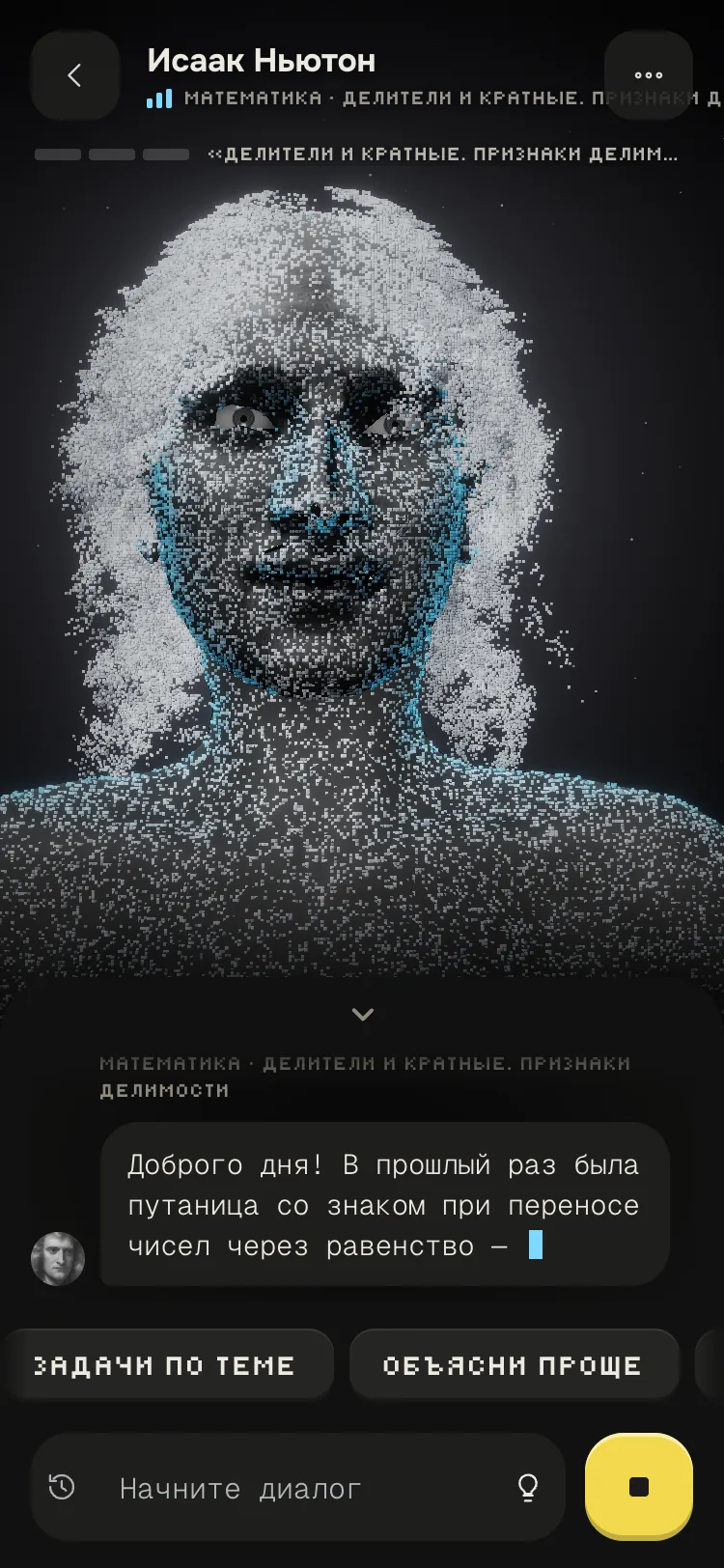
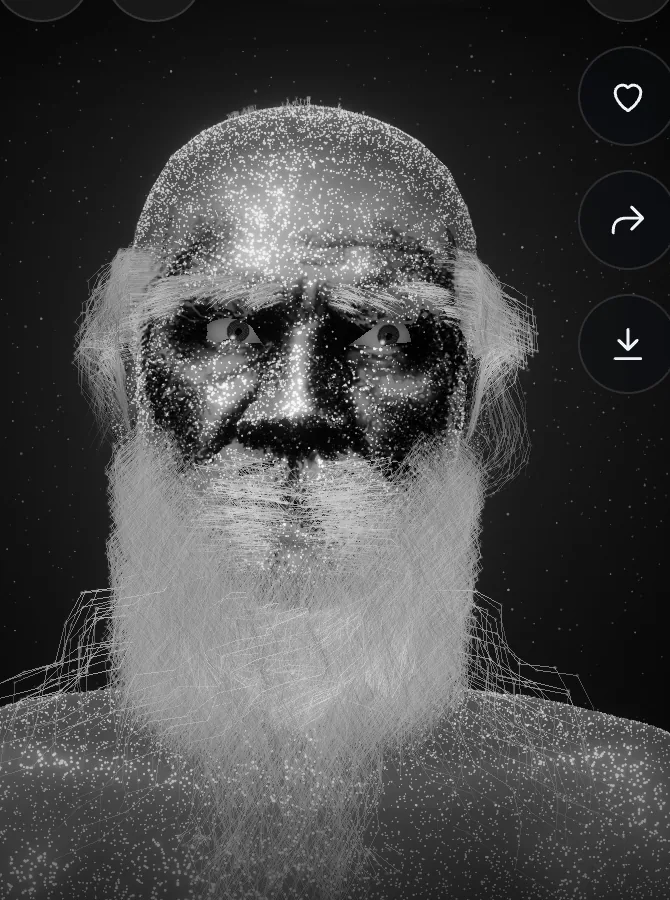
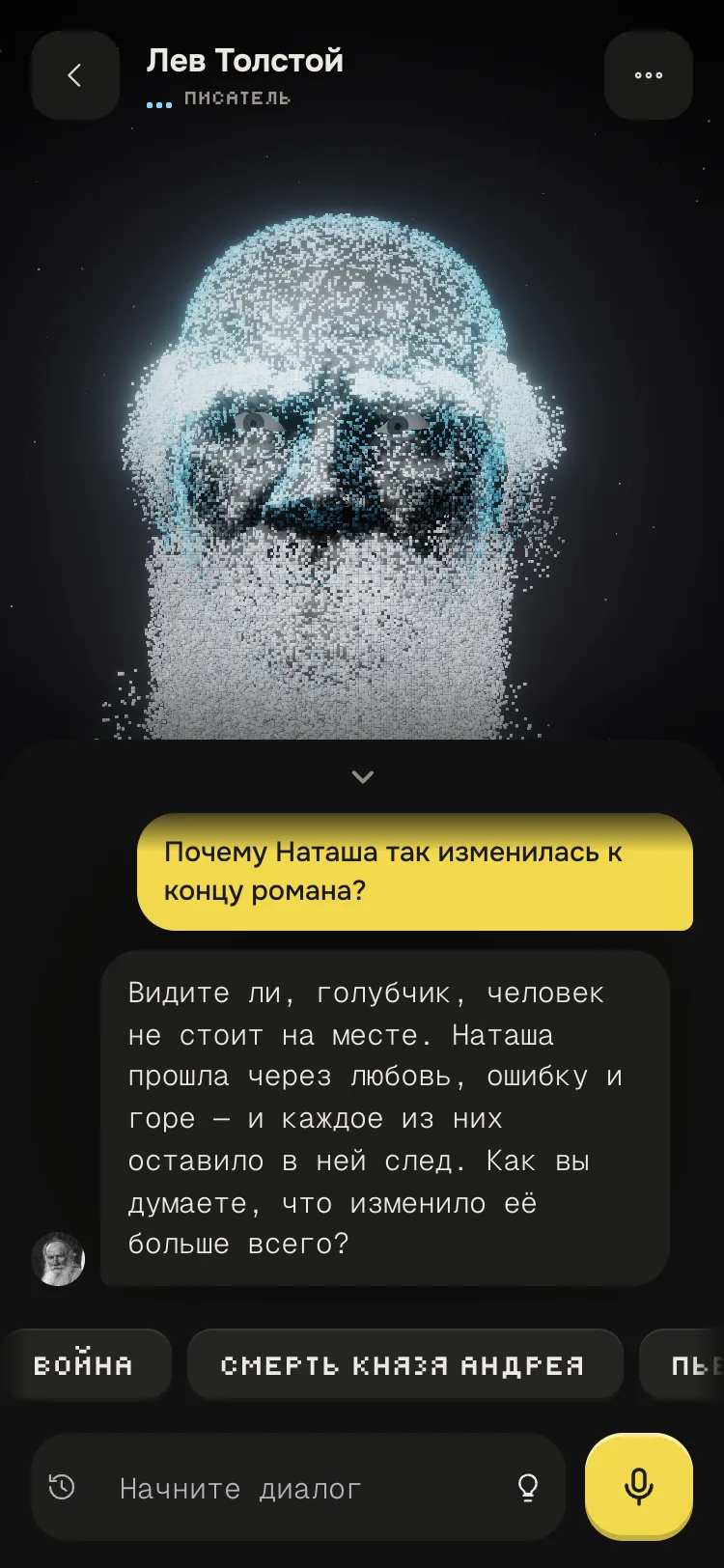
Not a ghost. Not a wax figure. A digital mind.
Every mentor's face is rebuilt from a public-domain portrait: 468 facial landmarks become a 3D head, and tens of thousands of points snap to a screen-aligned grid. The result reads instantly as digital — and still blinks, speaks and frowns.
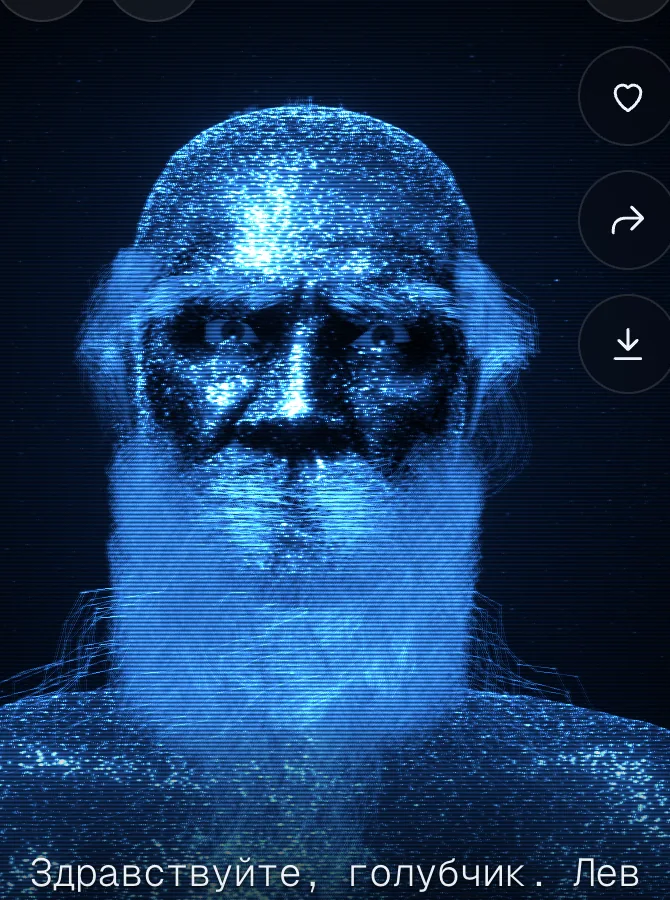
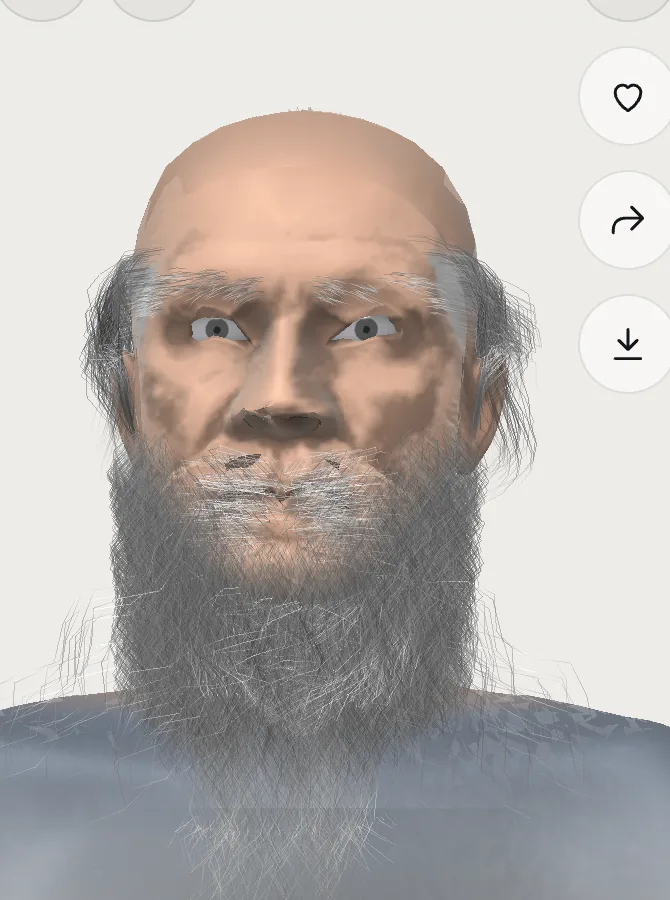
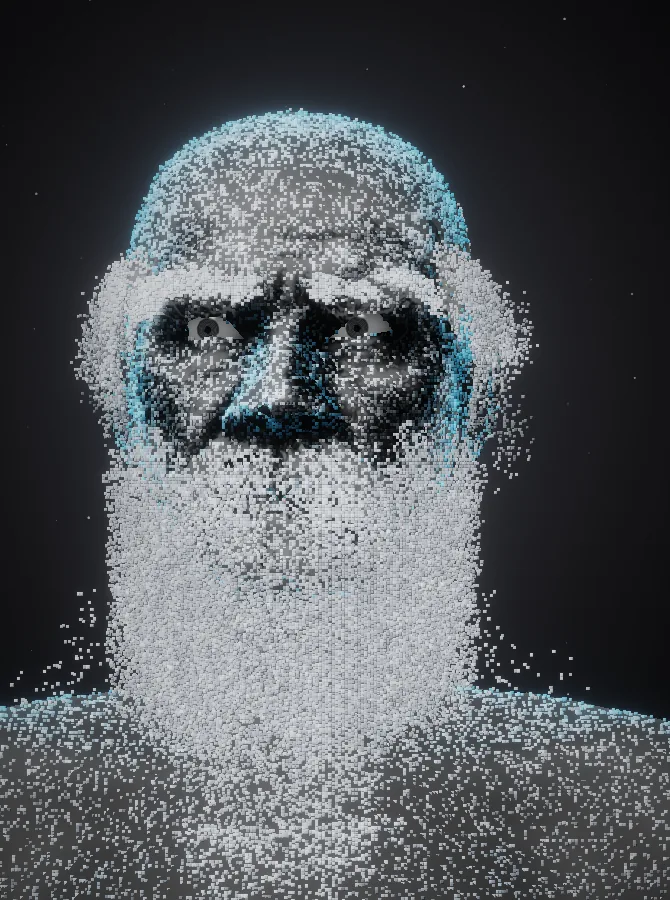
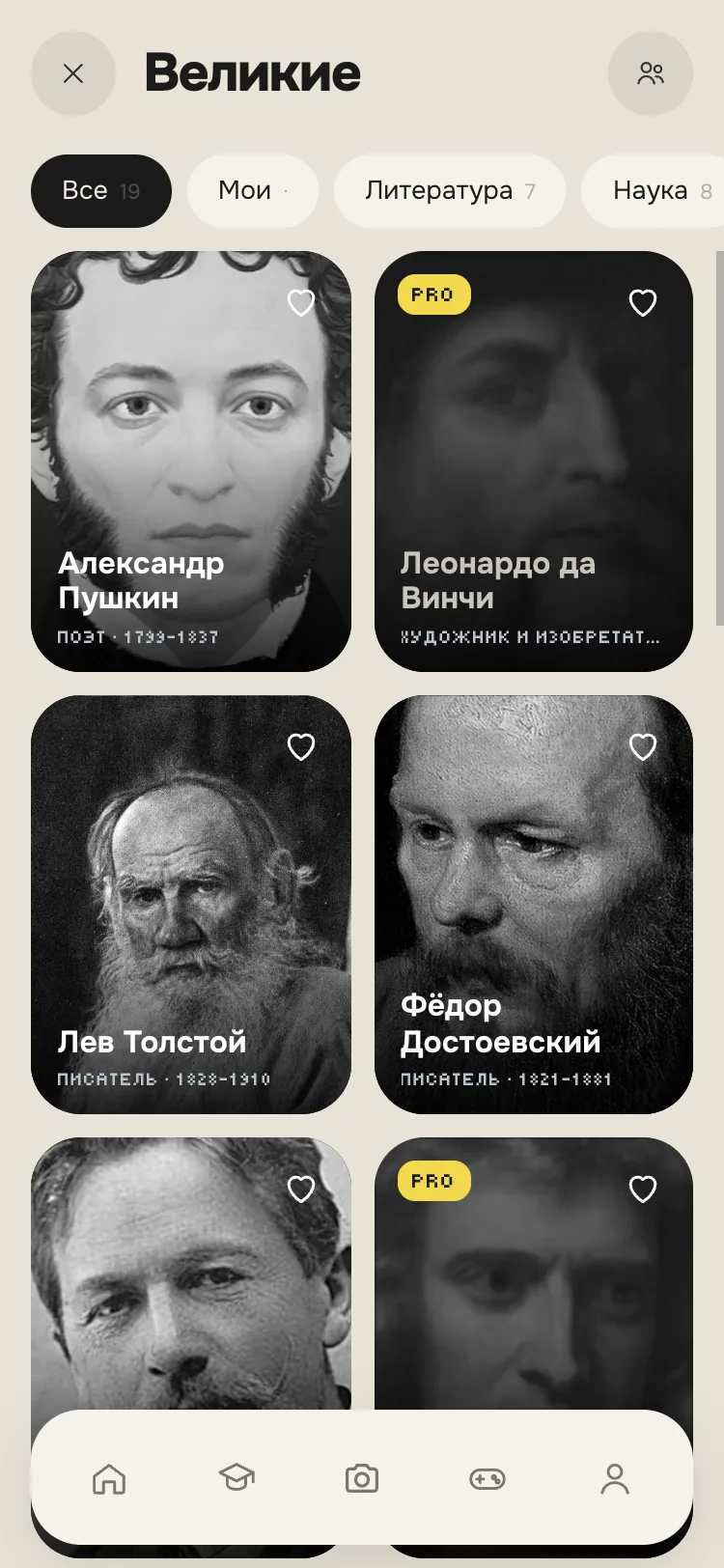
The hall is where you decide.
The stage is where you talk.
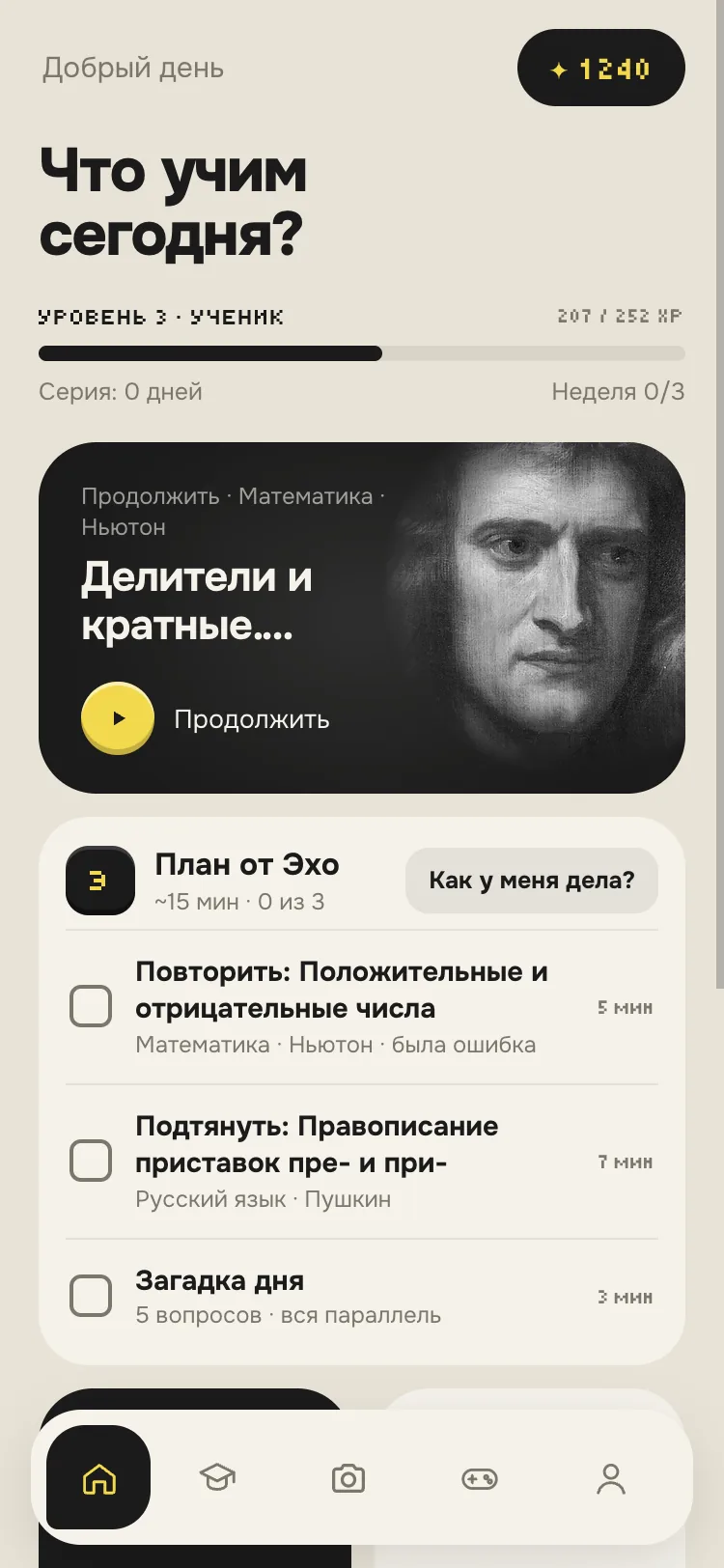
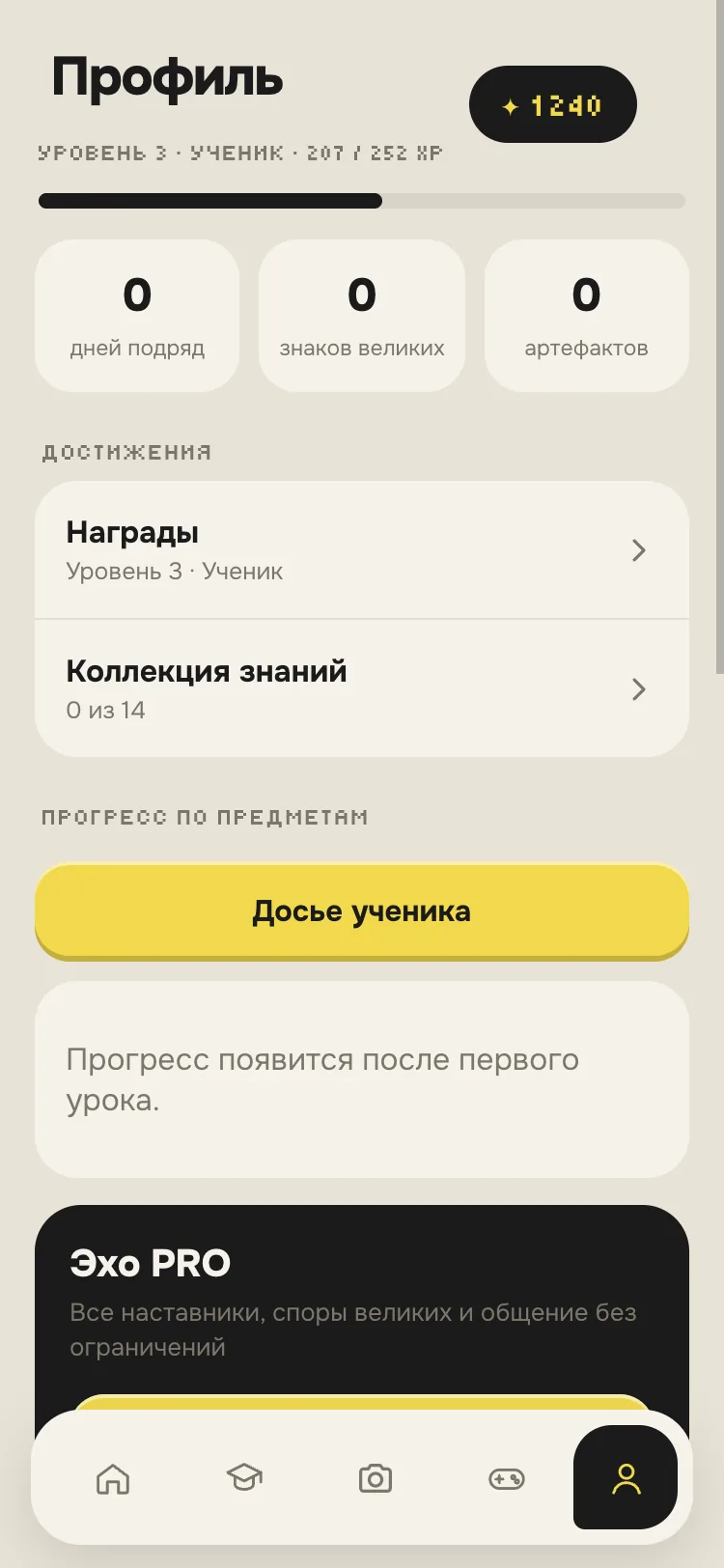
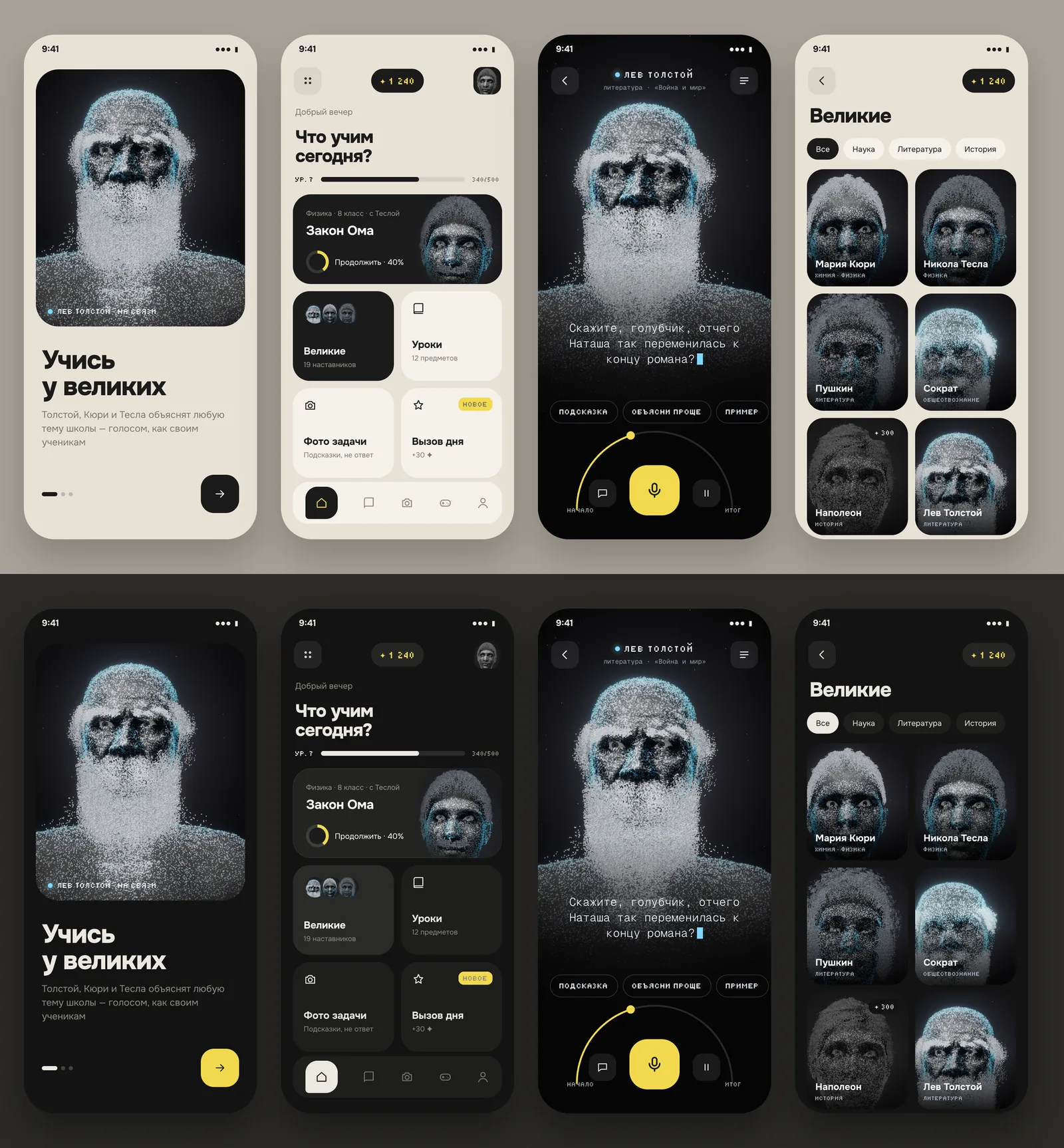
Navigation lives in a calm, paper-like hall: big cards, one accent, nothing glowing. The conversation moves to a dark stage — the only place where the voxel mentor appears. Two themes for the hall; the stage is always dark.
Plan, lessons, mentors, games, profile. Sand or graphite.
The mentor, the dialogue, the voice. Always dark.
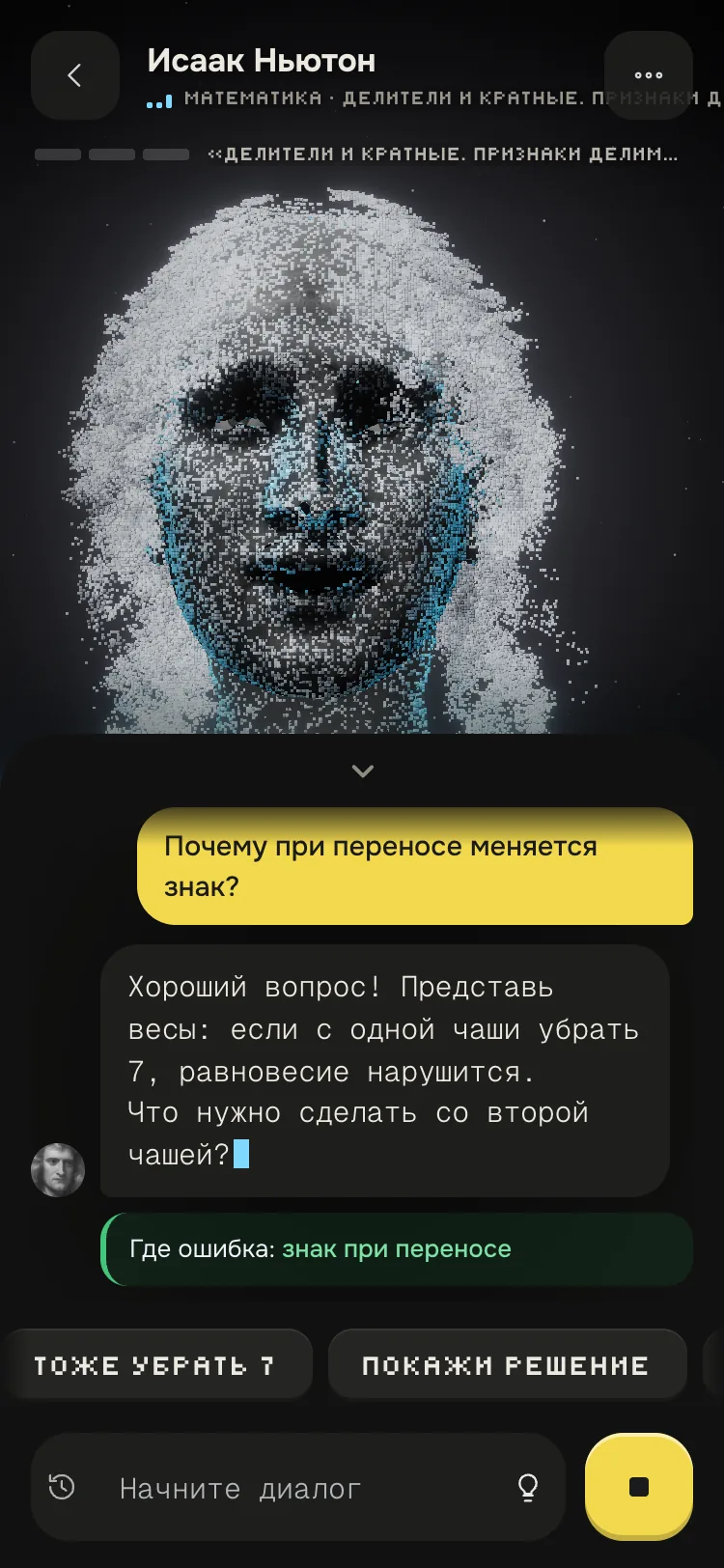
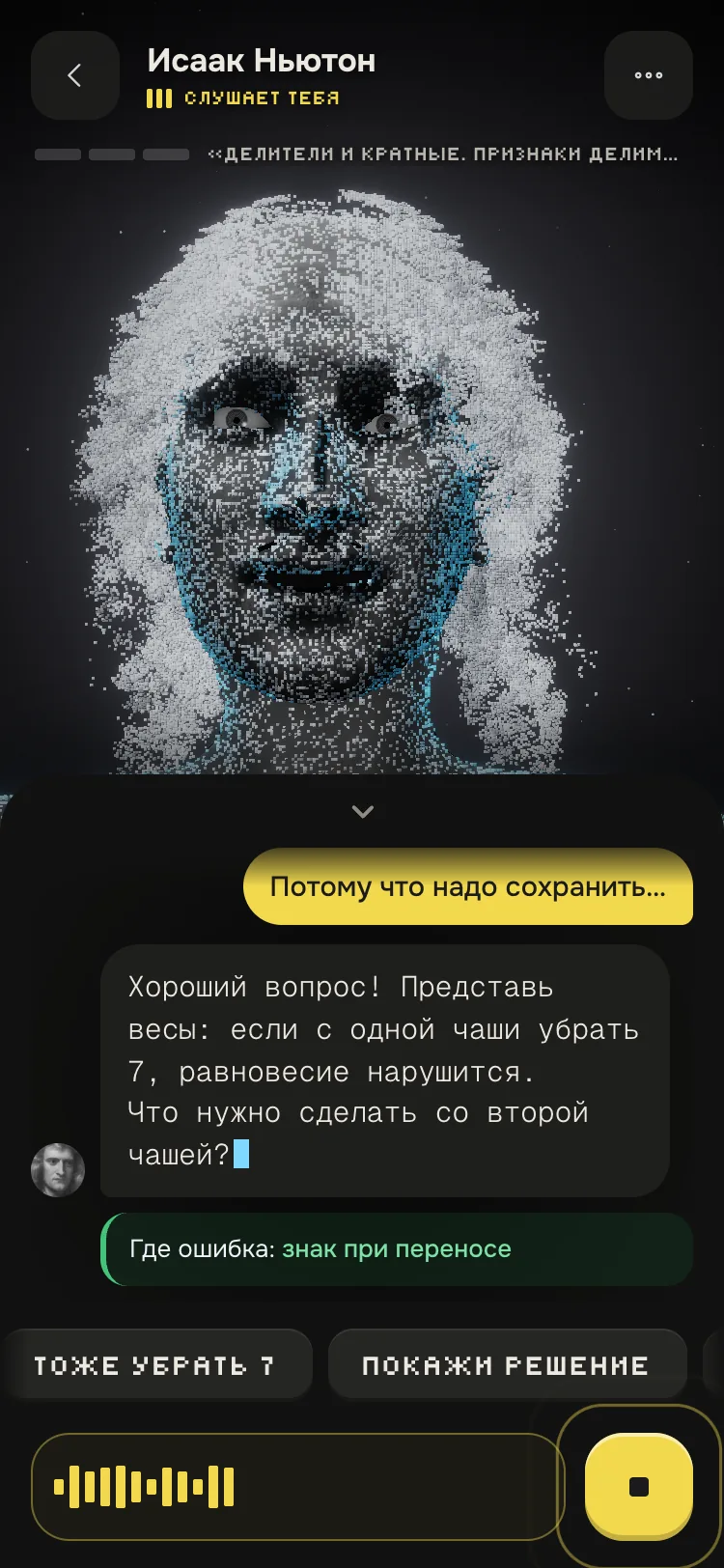
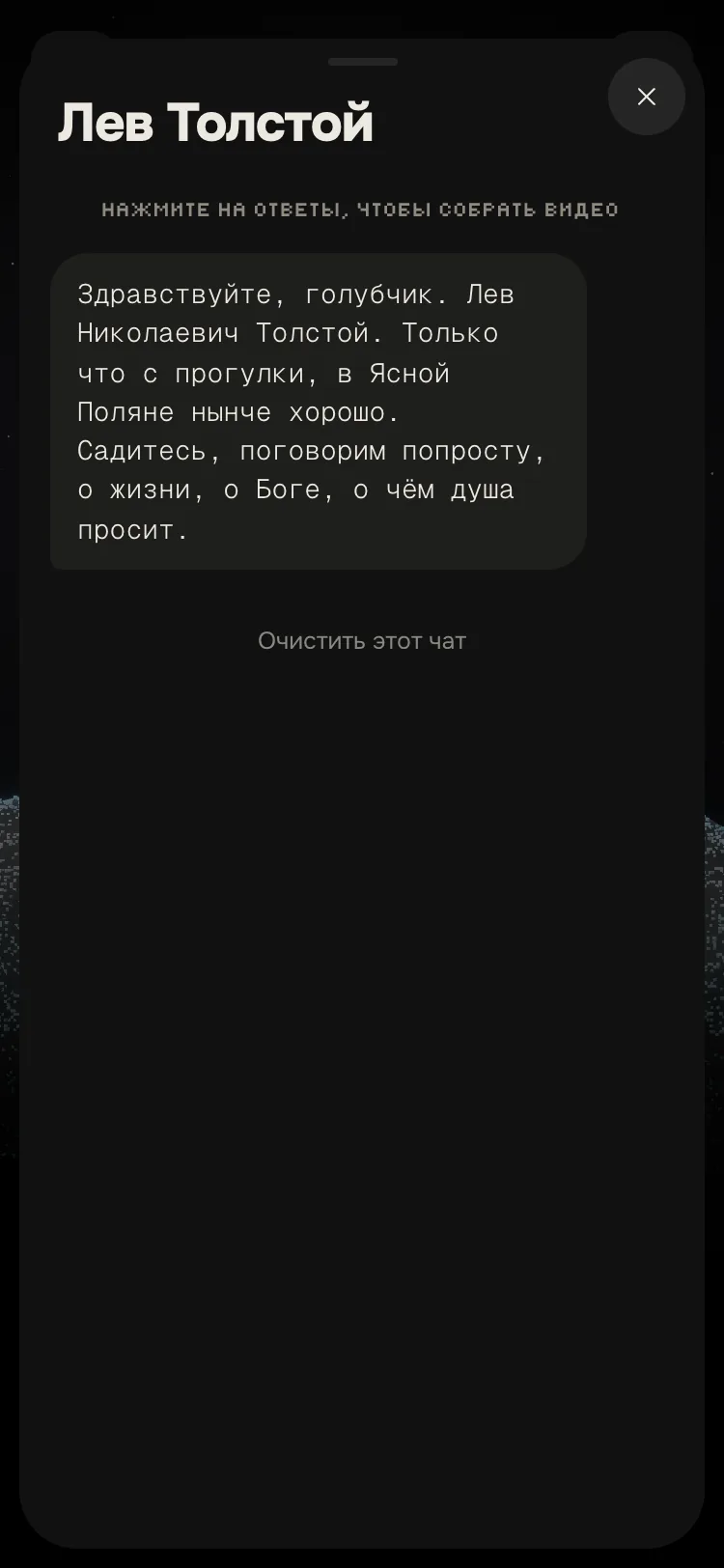
Never “here's the answer”. Never “figure it out” forever either.
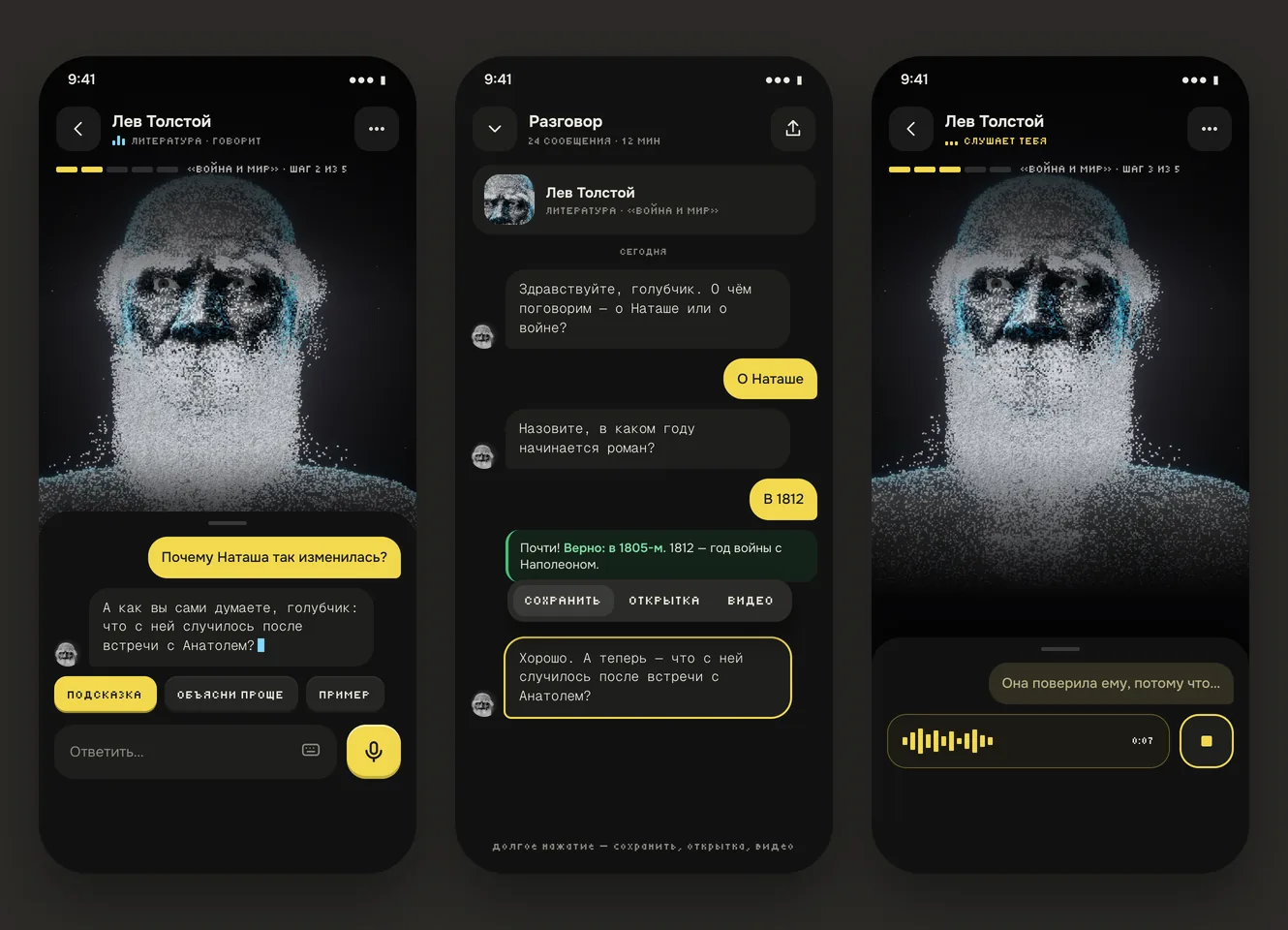
Pure Socratic tutoring frustrates: after the fifth “and what if…?” a child quits. Echo doses help on a five-step ladder. The app counts how many times the student got stuck; every stall moves the tutor one step up. Try it.
Not another chatbot. A homeroom teacher who remembers.
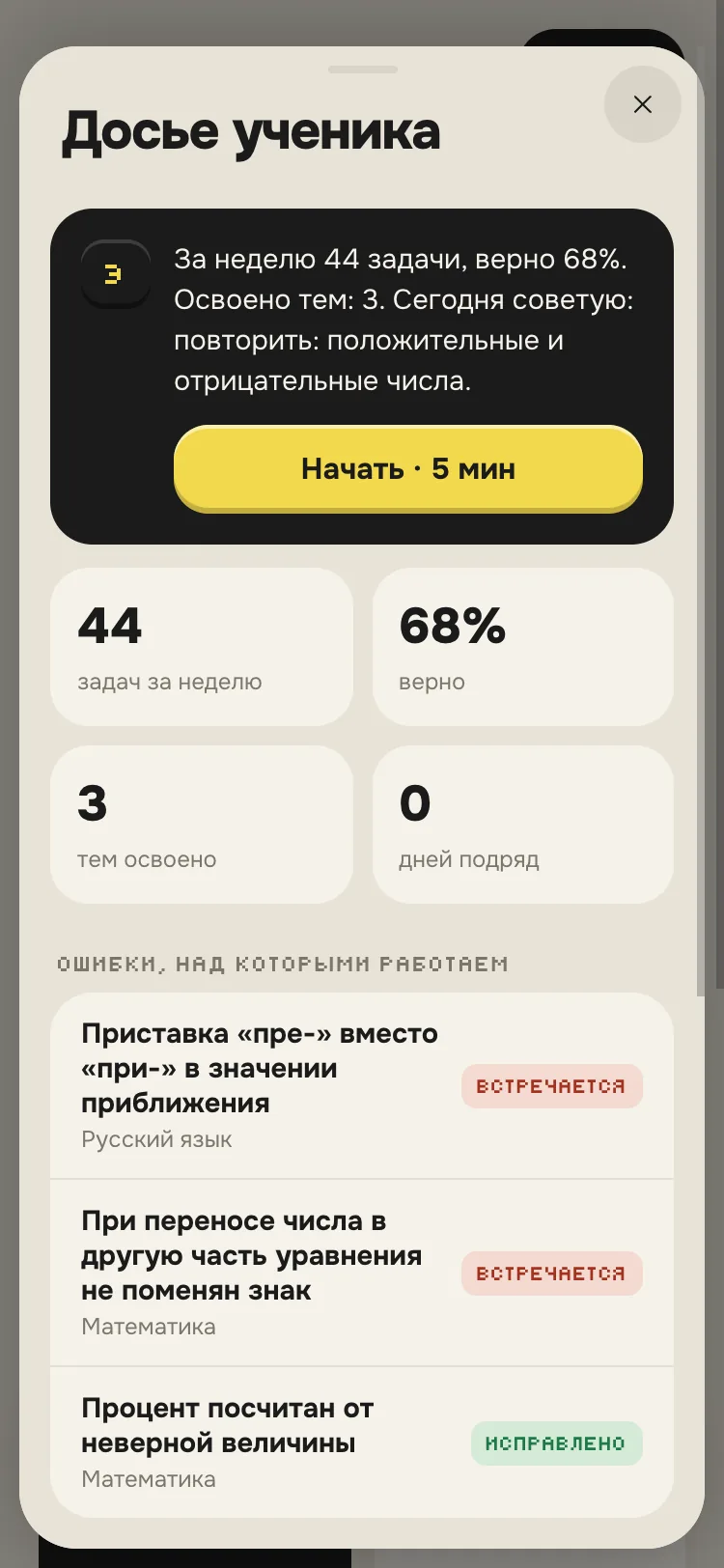
Echo plans the day from real data — where the student made mistakes, what's due for repetition, what's weak — and keeps a dossier that parents can read in ten seconds. This is what families pay for: proof of learning, not points.
«В прошлый раз была путаница со знаком при переносе чисел — давай проверим, как сейчас.»“Last time you mixed up the sign when moving a number — let's check it now.” Generated from the stored mistake, not scripted.
A teacher who stresses words wrong isn't a teacher.
Free Russian TTS mangles stress: ЗАМОК (a castle) and ЗАМОК (a lock) come out the same. We measured that Microsoft's free engine ignores stress marks and rejects phoneme markup — so every Russian voice moved to a local engine that honours stress, fed by a four-step pipeline that fits on a 1 GB server.
Children first. Then features.
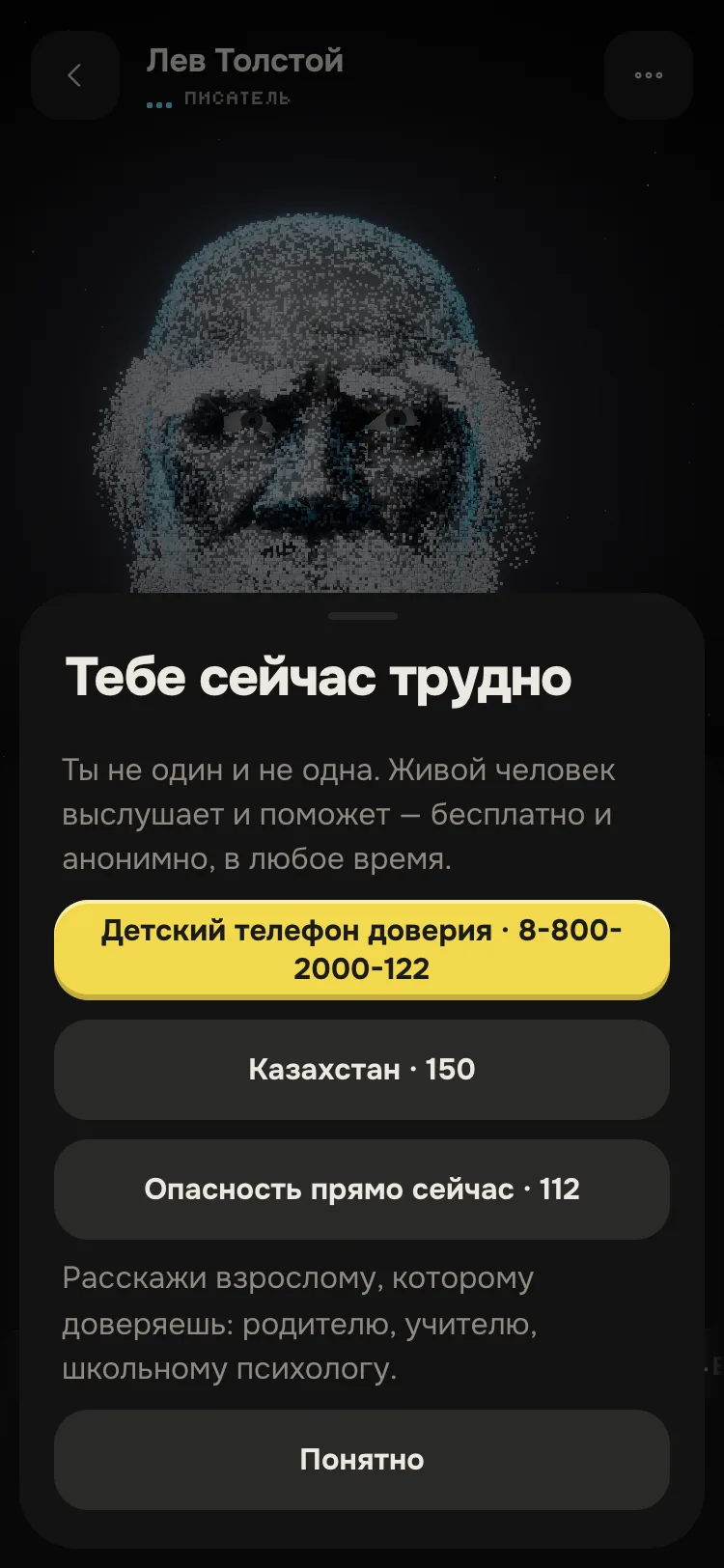
The mentor steps out of character and shows helplines — 8-800-2000-122, 150, 112 — one tap to call.
Unsafe topics are declined in character; the model's own output passes the same filter.
Text is recognised on the device; only the text of the task is sent.
Likeness and voice are labelled an “artistic AI reconstruction” — never a real recording.
No public feed for children, no comments, no face scanning. Two famous personas removed over image rights; one portrait replaced with a public-domain original.
Rewards for learning, not for tapping.
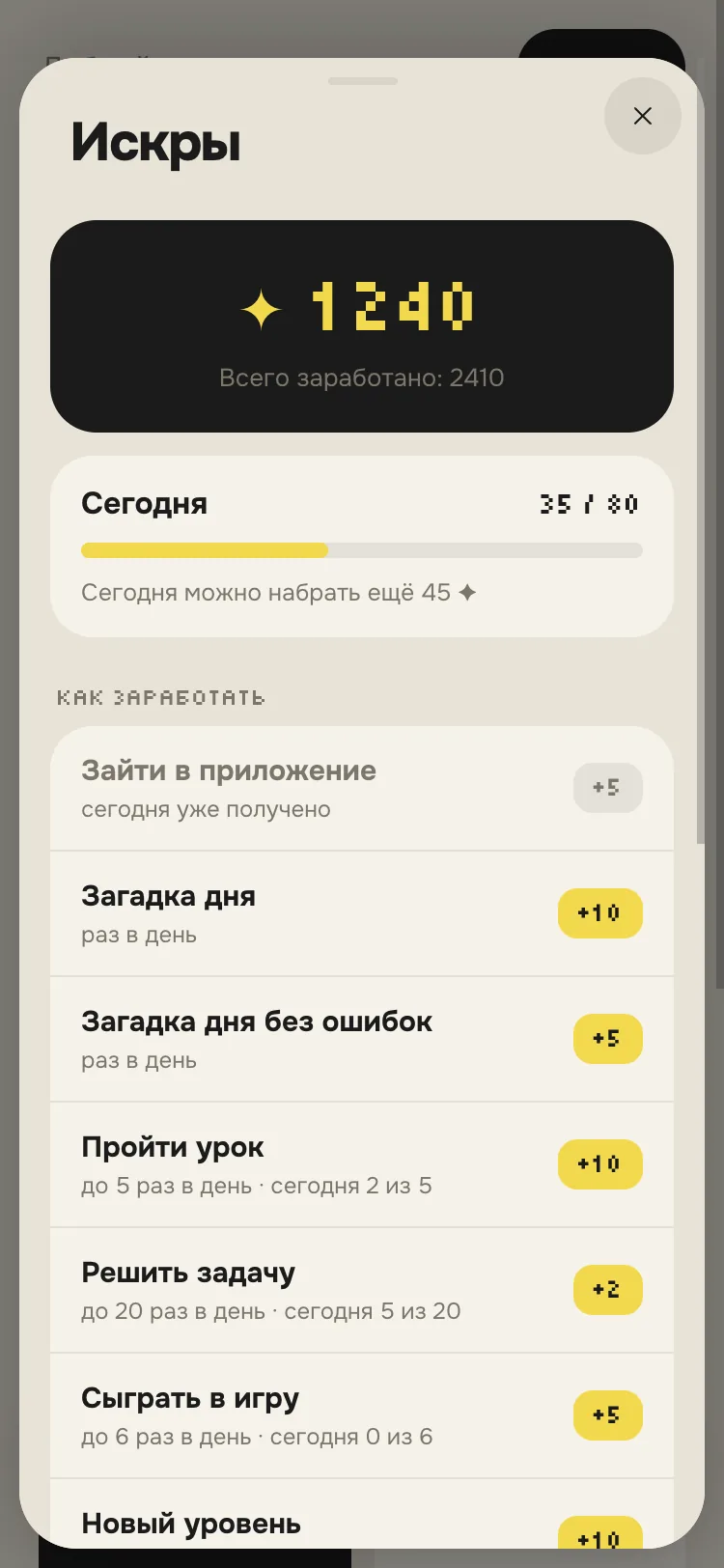
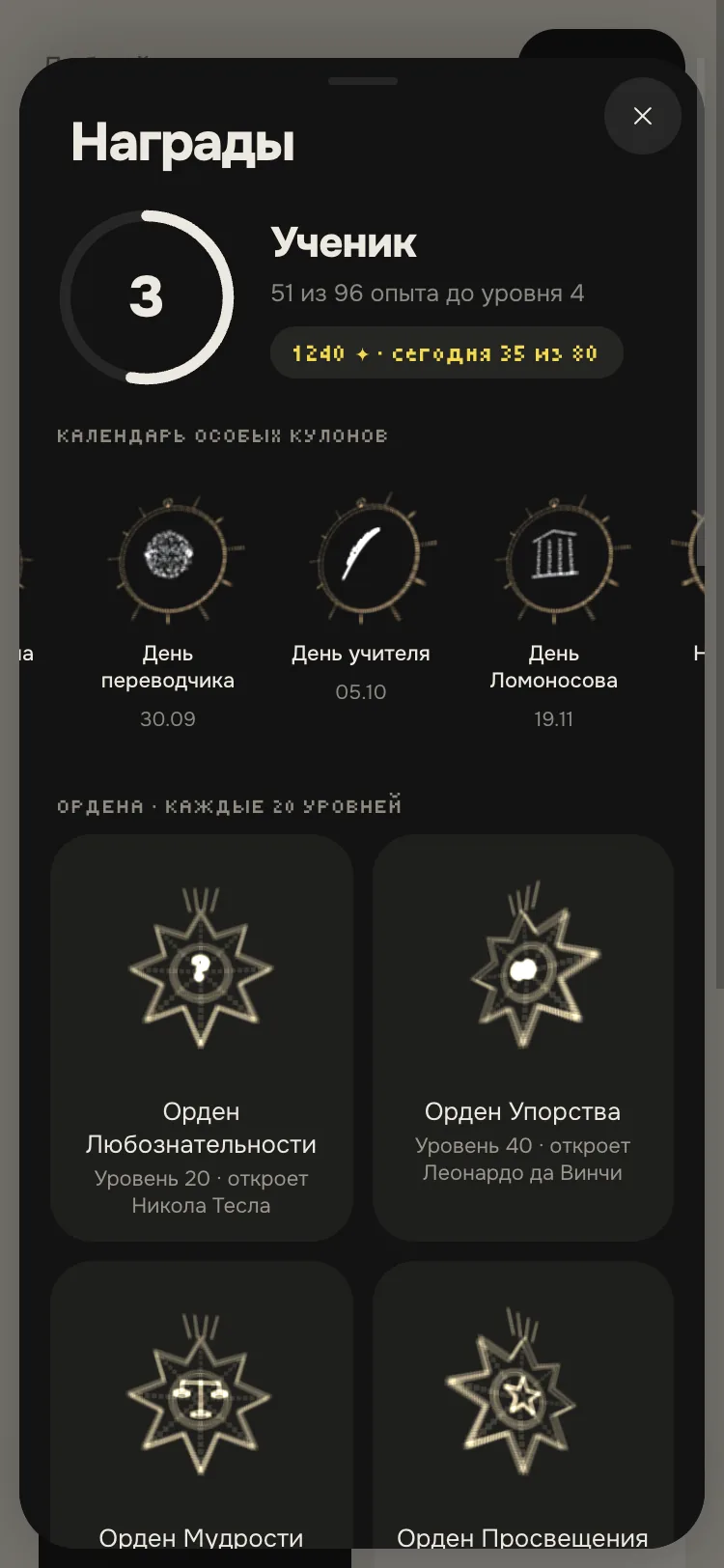
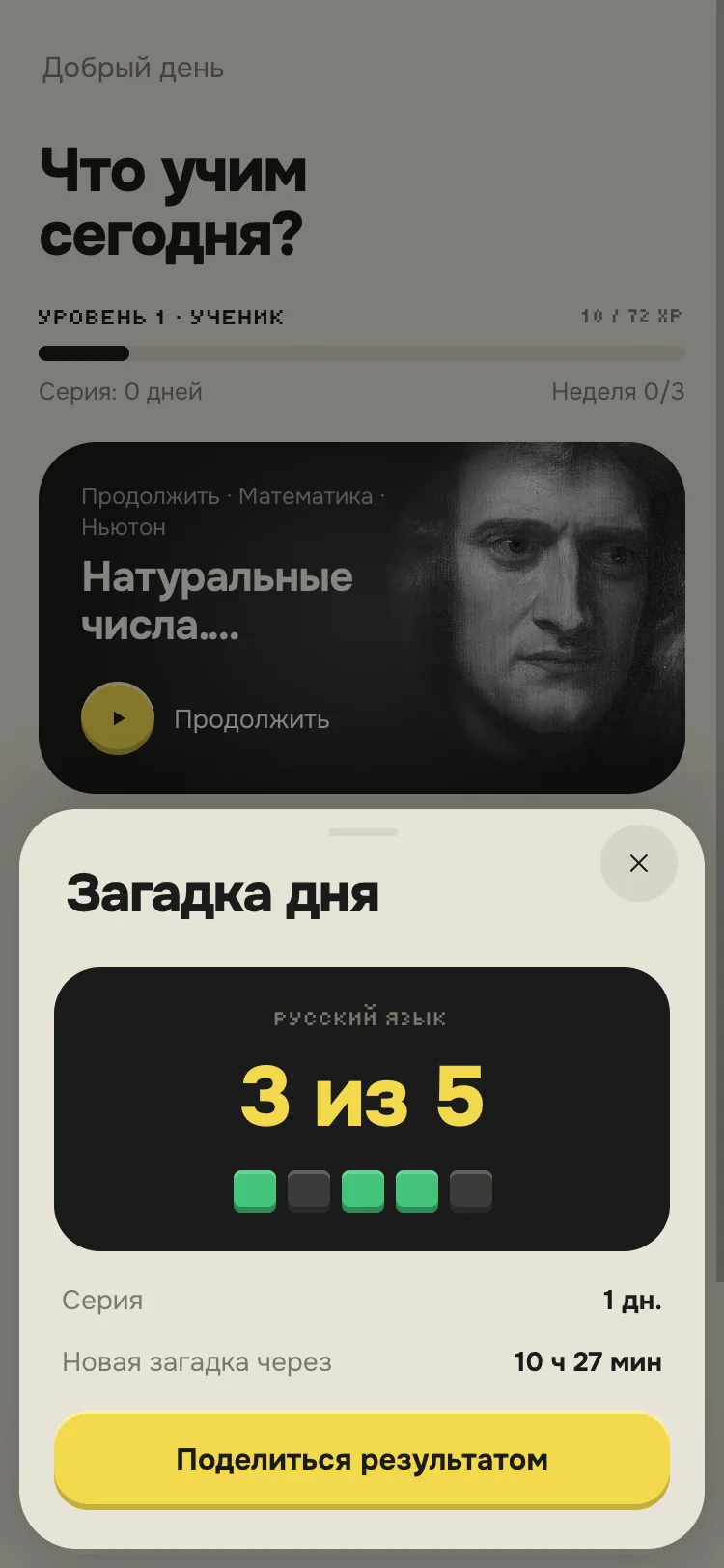
Sparks are earned for lessons, tasks and the riddle of the day — capped at 80 a day, with a transparent history. Pendants and orders live in a dark treasury. The riddle of the day is the same five questions for the whole grade — something to compare at school tomorrow.
Seven days. One designer. One AI.
Built in the open with Claude as the engineering team — every decision tested in the browser, deployed, listened to and argued about.
Prototype: an AI with a particle face, personas from portraits, a debate between two great minds.
Tutor programmes for 12 subjects written and validated: ~890 topics, ~4,600 tasks, skill model with spaced repetition, weekly parent report.
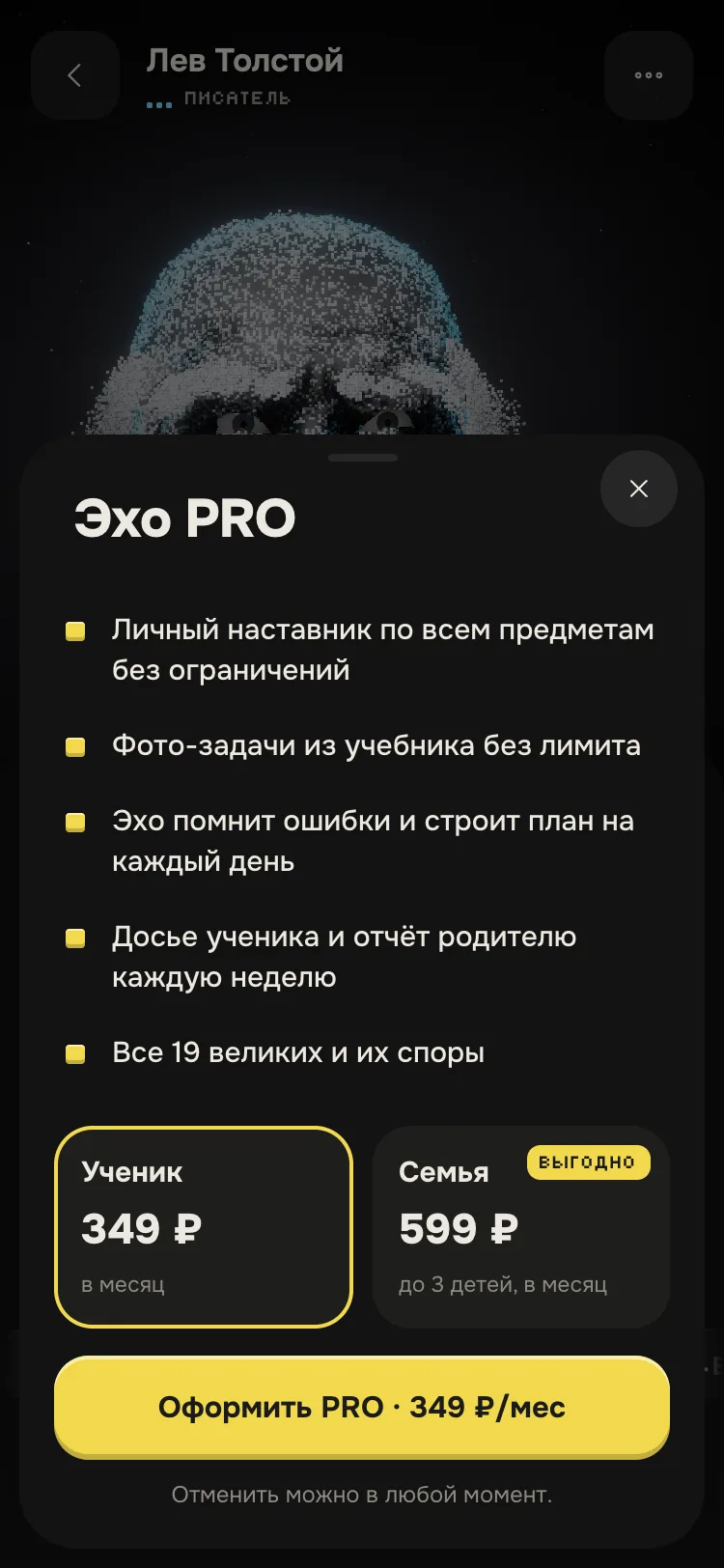
Riddle of the day, “Who is it?”, 100 levels, pendants & orders, Sparks on the server, homework-photo flow.
Micro-voxel faces, a new interface in two themes, the chat redesigned. Then an external critique — CPO, methodologist, child-safety lawyer — flipped the priorities:
Crisis flow, help ladder, tutor memory, Echo as curator, student dossier, PRO demand test, rights audit. Public feed and avatars postponed — on purpose.
Measured why stress was wrong, quantised a homograph model to fit the server, moved every voice to a local engine, chose voices by ear.
Small team. Real system.
An idea that needs a face, a voice and a brain?
We design and build AI products end to end — from the first sketch to a working beta — fast.